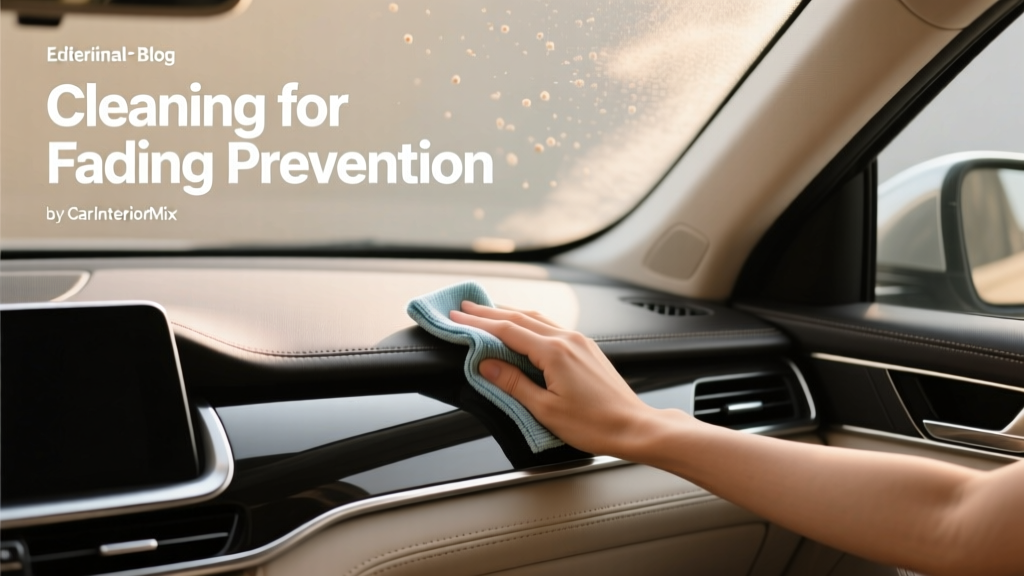
Cleaning for Fading Prevention - CarInteriorMix
Cleaning for Fading Prevention
Nothing makes a car interior look ?older? faster than fading. That washed-out dashboard, grayish-black seats, and sun-bleached door panels usually aren?t from one big mistake?they?re from small habits over time: harsh cleaners, skipped wipe-downs, and UV baking day after day.
The good news: you don?t need a full detail every weekend to prevent fading. A few targeted cleaning and protection habits (plus the right products) can keep your car interior color rich, your trim looking new, and your upholstery from getting that tired, chalky look.
-
Vacuum first so you don?t grind dirt into the surface
Dust and sand act like tiny abrasives. If you wipe your dashboard or seats before vacuuming, you can rub that grit into plastic, leather, and fabric, speeding up wear and dulling the finish. Do a quick vacuum of seats, seams, and floor mats first?especially after beach days or winter salt season?then wipe surfaces with a microfiber cloth. -
Use a damp microfiber for weekly ?reset? wipes
A lightly dampened microfiber cloth removes most interior dust without chemicals, and it?s gentle on soft-touch plastics and screens. For quick maintenance, use plain water or a rinseless wash dilution (like Optimum No Rinse at interior-safe strength) in a spray bottle. Example: if your dash looks dusty in sunlight, a 2-minute wipe keeps dust from baking into a film that?s harder to remove later. -
Pick pH-safe cleaners for leather and ?leatherette? seats
Leather and synthetic leather (leatherette/MB-Tex-style vinyl) can fade or discolor when hit with strong degreasers or all-purpose cleaners that are too alkaline. Use a dedicated leather cleaner (Lexol Leather Cleaner, Colourlock Mild Cleaner) or a gentle interior cleaner labeled safe for leather/vinyl. Test on a hidden area first?some ?matte? finishes can turn shiny if the product is too strong or you scrub too hard. -
Stop using household cleaners on dashboards and door panels
Glass cleaner, bleach wipes, and kitchen sprays can strip dyes and leave plastics looking blotchy or chalky. For plastic and vinyl trim, use an interior cleaner like Meguiar?s Quik Interior Detailer or a diluted APC that?s approved for interiors (follow the bottle?s dilution ratio). Real-world scenario: if your door pull area looks lighter than the rest, it?s often from repeated alcohol-heavy wipes plus hand oils?switching to an interior-safe cleaner helps stabilize the color. -
Don?t ?shine it up??choose UV protection with a matte finish
Super glossy dressings can attract dust, create glare, and sometimes leave residue that bakes in the sun. Look for a UV protectant with a natural/matte look like 303 Aerospace Protectant (great for dashboards, vinyl, and rubber seals) or CarPro PERL (dilutable for interior plastics). Apply it to a microfiber applicator, not directly on the dash, so you don?t overspray onto glass and create a visibility hazard. -
Clean sunscreen and lotion off seats immediately
Sunscreen is a big cause of fading and staining, especially on leather and light-colored interiors. Keep a small pack of interior-safe wipes or a spray bottle of gentle interior cleaner and microfiber in the trunk. Example: after a pool day, wipe the seat bolsters where shoulders and legs touch?those are the first spots to discolor and fade. -
Use the ?two-towel method? to prevent streaks and chemical residue
One towel lifts dirt; the second towel removes leftover cleaner and moisture. This matters for fading prevention because residue can attract more grime and increase sun-baked film on dashboards and trim. Spray product onto towel #1, wipe, then buff lightly with towel #2?your surfaces stay cleaner longer and you use less chemical overall. -
Protect high-UV areas with simple barriers (sunshade, tint, parking strategy)
Cleaning is only half the battle; UV exposure is the main fading driver for dashboards, steering wheels, and upper door panels. Use a windshield sunshade anytime you?re parked outside for more than a quick stop, and consider quality ceramic window tint (installed legally) to reduce UV and heat. Practical tip: if you can?t find shade, park so the rear faces the sun?most dashboards fade faster than rear seats. -
Deep clean fabric seats with low moisture to avoid ?water rings? and fading patches
Over-wetting fabric can cause uneven drying and visible rings that look like fading. Use a fabric/upholstery cleaner (Turtle Wax Power Out Upholstery Cleaner, Chemical Guys Fabric Clean) with a soft brush, then blot with a clean towel. If you have a small extractor (like a Bissell Little Green), do light passes?don?t soak the foam underneath. -
Condition leather the right way?thin, even, and not too often
Modern coated leather doesn?t need heavy oils, but it does benefit from occasional conditioning to help flexibility and reduce surface dryness that leads to color wear. Use a reputable conditioner (Leather Honey, Colourlock Leather Shield for newer leather) and apply a very thin layer after cleaning. If your driver seat bolster is starting to look lighter, conditioning plus gentler entry/exit habits can slow that ?rub fade.? -
Handle touchscreens, gauge clusters, and piano-black trim like delicate paint
These surfaces haze and dull quickly, which can look like fading even when it?s just micro-scratching. Use a clean, plush microfiber and a screen-safe cleaner (or distilled water) and avoid paper towels. Safety note: never spray directly onto electronics?spray onto the cloth first to prevent liquid from seeping into buttons and seams.
Quick Reference Summary
- Vacuum before wiping to avoid grinding grit into surfaces.
- Weekly damp microfiber wipe keeps dust from baking on.
- Use dedicated leather/vinyl cleaners?skip harsh APC on seats.
- Avoid household cleaners on dashboards and trim.
- Choose matte UV protectants (303, PERL) and apply to a towel.
- Remove sunscreen/lotion residue ASAP to prevent discoloration.
- Two-towel method reduces streaks and residue buildup.
- Sunshade + smart parking + legal tint reduces UV fading fast.
- Low-moisture fabric cleaning prevents rings and patchy ?fade.?
- Condition leather lightly and occasionally, especially on bolsters.
- Clean screens and piano-black trim gently to prevent hazing.
Conclusion
Fading prevention comes down to gentle cleaning, the right products, and blocking UV wherever you can. Try adding just two habits this week?vacuum-before-wipe and a matte UV protectant on the dash?and you?ll notice your interior stays darker, cleaner, and newer-looking for the long haul.